
The real difference between first-party vs. third-party data boils down to a simple concept: you own your first-party data, but you rent third-party data. First-party information is gold because it comes straight from your audience through their interactions on your website or app. It's accurate, trustworthy, and yours alone. Third-party data, on the other hand, is bought from massive data brokers who have no direct connection to the users, which almost always creates serious gaps in accuracy and consent.
Understanding The Shift to First-Party Data
The entire conversation around data has flipped. We've moved away from a model of scooping up as much data as possible to one built on trust and direct relationships with customers. This isn't just a trend; it's a fundamental change driven by consumers who are savvier than ever about their privacy, alongside tough new regulations. The distinction between first-party and third-party data is now a strategic necessity, not just a technical detail.
This transition has been one of the biggest stories in digital marketing for a while now. The reliance on third-party data among digital marketers fell from 75% in 2022 to just 61% in 2023, a clear sign of eroding trust. In its place, first-party data has become the go-to for 84% of marketers, who are doubling down on its reliability and compliance. You can find more stats on these marketing data trends over at QR Code Chimp.
Core Distinctions Between Data Types
Think of first-party data as a direct conversation with your audience. It's information they either give you outright or that you gather from their direct engagement with your brand.
Some classic examples include:
- Email newsletter sign-ups
- Purchase history logged in your CRM
- User behavior you track on your own website
- Information from loyalty programs
Third-party data is the opposite. It’s collected by companies that have no direct relationship with the user. They pull it from countless sources, bundle it up, and sell it to anyone willing to pay. This usually includes demographic, behavioral, and psychographic profiles pieced together without the user's explicit, context-aware consent.
This image perfectly illustrates the difference: first-party data is a direct, one-to-one relationship, while third-party data is a messy aggregation from a large, anonymous crowd.
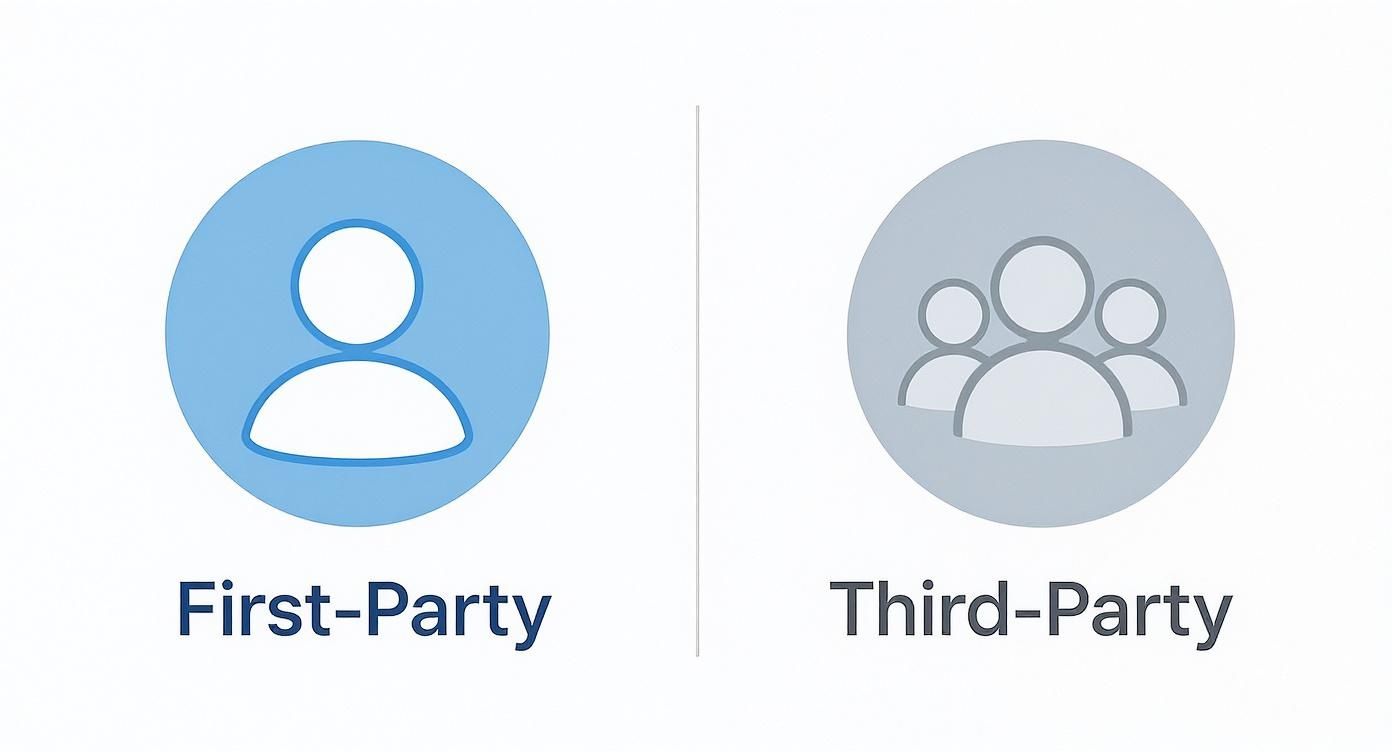
This is precisely why first-party data gives you a much clearer, more authentic picture of your customers. It's grounded in real interactions, not just inferred behaviors from scattered, secondhand sources.
Key Takeaway: The value of first-party data is all about its origin. Because you collect it yourself, you can stand behind its accuracy, relevance, and compliance, three things third-party data can almost never guarantee.
To make things even clearer, here's a quick side-by-side comparison that breaks down the fundamental differences.
First Party vs Third Party Data At a Glance
| Characteristic | First-Party Data | Third-Party Data |
|---|---|---|
| Source | Collected directly from your audience (website, app, CRM). | Purchased from data aggregators and external sources. |
| Accuracy | High. It comes straight from user interactions. | Variable. Can be inaccurate, outdated, or just plain irrelevant. |
| Privacy & Consent | Transparent. Consent is obtained directly from the user. | Opaque. Consent is often bundled, unclear, or non-existent. |
| Cost | Free to collect, but requires investment in technology and trust-building. | Must be purchased or licensed, often with recurring fees. |
| Competitive Edge | Unique to your business, providing a distinct advantage. | Available to any competitor willing to pay for it. |
| Relevance | Highly relevant to your specific audience and business goals. | Broad and generic, not tailored to your specific needs. |
As you can see, the choice between them isn't just about data points; it's about the quality of the relationship you want to build with your customers. One is a solid foundation, the other is built on sand.
A Look Under the Hood: Comparing Data Collection
To really get the difference between first-party and third-party data, you have to look at how each is actually collected. The technical mechanics are worlds apart, and it all comes down to the website you’re on right now. This distinction is the very reason one is seen as privacy-friendly while the other is getting phased out.
The heart of this whole conversation is the humble HTTP cookie, which is just a tiny text file your browser stores. A first-party cookie is created and owned by the domain you’re visiting. Think of it as a direct, one-to-one handshake meant to make your visit better.
For example, when an e-commerce site remembers what’s in your shopping cart or keeps you logged in as you click around, that’s a first-party cookie at work. It has a clear, functional purpose tied directly to the service you're choosing to use, making it a totally normal and expected part of browsing the web.
This simple diagram shows that direct relationship: your browser talks to the website's server, and the server sets a first-party cookie.
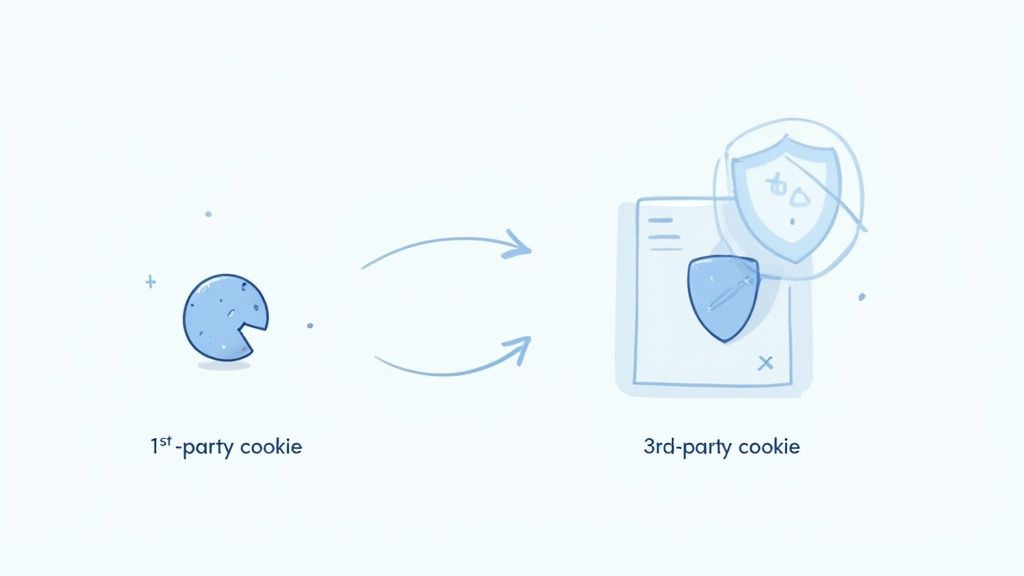
The process is straightforward and transparent. The data stays between you and the site you decided to visit.
How Third-Party Data Gets Collected
Third-party collection is a lot more complicated and way less obvious. A third-party cookie is dropped onto your browser by a domain that is not the one you're currently on. This usually happens through scripts or tracking pixels hiding on the page, often placed there by ad-tech companies or data brokers.
Picture this: you're reading an article on a news website. That site runs an ad from a big advertising network. It's the ad network's server, not the news site's, that places a third-party cookie on your browser. This little cookie then follows you around the internet, reporting back every time you visit another site that uses that same ad network. Bit by bit, it builds a shockingly detailed profile of your habits and interests.
For a deeper look, you can learn more about the complexities of third-party data collection methods and what they mean for privacy.
Crucial Difference: First-party cookies work within a single, trusted domain to make the user's experience better. Third-party cookies work across countless unrelated domains, mostly for cross-site tracking and ad targeting, often without any direct relationship to the user.
It’s this cross-site tracking ability that has attracted so much heat from consumers and regulators. It allows companies you’ve never even heard of to build massive profiles about you, usually without your clear and informed consent.
The Technical Crumbling of Third-Party Tracking
The entire infrastructure that supports third-party data is being actively torn down. The major web browsers have already taken huge steps to block these cookies by default, completely upending the digital advertising world.
- Apple's Intelligent Tracking Prevention (ITP): Starting back in 2017, Apple’s Safari browser began aggressively tightening its rules on third-party cookies. Today, it makes cross-site tracking nearly impossible for its massive user base.
- Mozilla's Enhanced Tracking Protection (ETP): Firefox now blocks third-party tracking cookies by default for everyone, giving users better privacy right out of the box.
- Google's Privacy Sandbox: Google is in the final stages of phasing out third-party cookies in Chrome. They’re replacing them with a new set of APIs intended to support advertising without letting companies track individual users across different sites. This is pretty much the final nail in the coffin.
These browser-level changes mean the main tool for collecting third-party data is simply going away. Businesses that built their entire marketing playbooks on this foundation are now scrambling to adapt. The technical reality is that relying on third-party cookies isn’t a viable long-term strategy anymore. This massive shift is forcing everyone to recognize the power and stability of first-party data.
Navigating Data Privacy and Regulations
The line between first-party and third-party data gets drawn in sharp relief when you look at it through the lens of privacy law. Regulations like Europe's GDPR and California's CCPA/CPRA didn't just make suggestions, they laid down strict rules about data collection, and they overwhelmingly favor the transparent nature of first-party relationships.
These laws come with teeth, carrying massive financial penalties that force companies to rethink how they handle user information.
At the core of these regulations is a simple but powerful idea: explicit consent. This means a user has to knowingly and actively agree to let you collect and use their data for a specific reason. With first-party data, this is baked right into the user experience. When someone signs up for your newsletter or creates an account on your site, they're entering a direct agreement with your brand. The consent is clear, contextual, and easy to manage.
The Compliance Advantage of First-Party Data
First-party data collection just naturally clicks with the principles of modern privacy laws. When a customer hands over their email for your loyalty program, their consent is direct and unmistakable. You own that relationship and the responsibility to manage their data with respect, which makes compliance a whole lot simpler.
This direct line of consent is your biggest compliance asset. It’s how you build trust and gives you a solid legal foundation for your marketing and personalization. You know exactly how and when you got permission to use someone's data, which is a non-negotiable requirement under GDPR. The first step in building these valuable connections is often figuring out how to identify anonymous website visitors and turn them into known users.
Third-party data, on the other hand, exists in a legal and ethical gray area. The chain of consent is usually frayed, if not completely broken.
A user might have agreed to data collection on one website, but they almost certainly didn’t agree to have their data bundled, sold, and used by hundreds of companies they’ve never heard of for purposes they never imagined. This murky process is a massive compliance risk.
High Stakes and Broken Trust with Third-Party Data
The problems with third-party data go way beyond regulatory fines. Breaches involving third-party vendors have become disturbingly frequent, chipping away at what little trust was left. In 2022, the personal data of over 400 million Twitter users was stolen through an API vulnerability, a stark reminder of the risks of relying on external data ecosystems.
The healthcare industry was hit hardest, accounting for 34.9% of all third-party data breaches that year, proving that even our most sensitive information isn't safe.
This trend creates a serious liability for any brand that buys and uses this data. If the third-party data you bought was collected improperly or gets exposed in a breach, your company could be held responsible for the fallout. We're talking about severe brand damage and a customer trust deficit that’s hard to recover from. That's why understanding third-party risk management is no longer optional.
Responding to Consumer Demand for Privacy
Beyond the legal headaches, there’s a powerful market force pushing this shift: consumer demand. People are more privacy-savvy than ever. They expect transparency and control over their personal information and will quickly ditch brands that feel creepy or untrustworthy.
Here’s a quick breakdown of how consumers see it:
- First-Party Data: Seen as a fair trade. Consumers give you their data to get a better, more personalized experience directly from a brand they choose to engage with.
- Third-Party Data: Feels invasive and sneaky. The cross-site tracking that fuels the third-party data machine feels like surveillance to most people, and it actively harms their perception of your brand.
Choosing between first-party and third-party data isn't just a marketing tactic anymore; it's a core part of brand reputation and risk management. Prioritizing first-party data is the only reliable way to build lasting, trust-based relationships with your customers while staying on the right side of global privacy laws.
Measuring The Impact on Business Growth
The whole first-party vs. third-party data debate stops being theoretical the second you look at the results. This choice directly impacts your most important KPIs, shaping everything from customer acquisition costs to long-term loyalty and, ultimately, your bottom line. A strategy built on your own data is an investment in sustainable growth. Relying on third-party data? That's a recipe for diminishing returns.
The difference is night and day when it comes to personalization.
With first-party data, you can create experiences that feel genuinely helpful. An e-commerce brand, for example, can send an email showcasing products that perfectly complement a customer’s recent purchase. A SaaS company can tweak its website to highlight features that a specific user segment has already shown interest in, which is a straight line to better engagement and more conversions.
Third-party data, on the other hand, gives you broad, clumsy segmentation. An advertiser might target "males aged 25-40 interested in tech," but that generic profile misses all the critical nuance of what someone actually wants or has done before. This leads to wasted ad spend and campaigns that just don't land, tanking both ROAS and brand perception.
Comparing Key Performance Indicators
When you put the two data strategies head-to-head, the performance gap is impossible to ignore. A business using its own data will consistently run circles around one buying external profiles.
Let's break down how this plays out across core business metrics:
- Conversion Rates: Personalization fueled by first-party data, like showing a returning visitor a "welcome back" offer on products they've previously viewed, is a direct lever for lifting conversion rates. Third-party targeting is far less precise, resulting in lower engagement and fewer sales.
- Customer Lifetime Value (CLV): First-party data is the foundation of loyalty. By understanding customer preferences and purchase history, brands can build real relationships, encouraging repeat business and driving up CLV. Third-party data is transactional and anonymous, making it nearly impossible to cultivate that kind of connection.
- Return on Ad Spend (ROAS): When you use first-party data, your marketing is hyper-focused on people with high intent. That precision cuts out wasted spend and maximizes ROAS. For instance, a solid first-party data strategy can dramatically improve the accuracy of predictive lead scoring models, directly boosting sales efficiency and growth.
This isn't just a niche opinion; the value of direct data is being recognized everywhere. According to Nielsen’s Annual Marketing Report, over a third of buyers feel they need more first-party data to truly get their customers. Marketers agree, with 61.9% actively building their own data strategies to get ahead of the third-party cookie phase-out. You can dig deeper into these trends in Funnel.io's detailed analysis.
The Bottom Line: Investing in a first-party data foundation isn't just a defensive move against privacy changes. It’s a proactive strategy for building a serious, sustainable competitive advantage.
Building a Moat Around Your Business
At the end of the day, your first-party data is a proprietary asset that no competitor can ever buy. It’s the collective wisdom from every direct interaction you've had with your audience, giving you a unique window into their needs, behaviors, and motivations.
This creates a powerful "moat" around your business. It protects you from competitors who are still stuck renting generic, widely available third-party data.
As external data markets become less reliable and more regulated, the companies that have cultivated their own data sources are the ones who will be set up to win. They can innovate faster, create better customer experiences, and build a brand that people actually trust and want to engage with. In the first party vs third party debate, the distinction is clear, one builds an appreciating asset, while the other relies on a depreciating one.
How to Build a First-Party Data Strategy
Moving away from a reliance on third-party data to build a first-party ecosystem isn't just a technical swap. It's a fundamental business shift. It means creating a deliberate framework to collect, unify, and actually use the high-value information your customers give you directly. Done right, this process turns your data from a rented commodity into a proprietary asset that drives real, sustainable growth.
The first move is always a full audit of your customer touchpoints. Where are you already having direct conversations with your audience? Finding these channels is the key to collecting data in a way that feels natural and genuinely improves the user's experience.
This is about more than just harvesting emails. It's about building a flywheel: better data leads to better experiences, which encourages customers to share more valuable insights. That's the loop you want.

Identify Your High-Value Data Collection Points
Your best first-party data comes from interactions where customers get something tangible in return for sharing their information. These aren't passive tracking pixels; they're active exchanges of value.
Start by mapping out these moments across the entire customer journey:
- Website and App Interactions: Think beyond simple page views. Focus on form submissions, content downloads, account sign-ups, and product searches. These actions scream intent.
- Transactional Data: Purchase history, abandoned carts, and subscription details pulled from your e-commerce platform or CRM are pure gold. They tell you exactly what customers do, not just what they say.
- Customer Support Channels: Every ticket, live chat, or phone call is packed with rich, qualitative data about customer pain points and what they actually need from you.
- Loyalty and Reward Programs: These programs are practically purpose-built for first-party data collection, offering clear rewards in exchange for purchase history and preferences.
- Surveys and Feedback Forms: Sometimes, the best way is the most direct. Just ask. It's the most transparent method you have.
By homing in on these channels, you ensure the data you gather is not only accurate but also deeply relevant to the relationship you have with your customer.
Select the Right Technology to Unify Your Data
Collecting data from all these places is only half the job. The real power is unlocked when you pull it all together into a single, coherent view of each customer. Siloed information is nearly worthless.
This is where your tech stack comes in. The goal is to create a central hub for all customer data, giving you a complete picture of every interaction. A fragmented view is a common killer of data strategies, but the right tools can patch it all together.
Think of your tech stack as the central nervous system for your data strategy. It should connect every disparate source into one actionable, unified profile for every single customer.
This unified view is what makes true, one-to-one personalization possible at scale. The right tools will also help you manage consent and stay on the right side of privacy regulations.
Key Components of a First-Party Data Tech Stack
Building a system to manage first-party data requires a few core technologies working in concert. Here’s a look at the essential pieces of the puzzle.
| Technology Component | Primary Function | Example Platforms |
|---|---|---|
| Customer Relationship Management (CRM) | Stores and manages direct customer interactions, sales data, and contact information. | Salesforce, HubSpot, Zoho |
| Customer Data Platform (CDP) | Ingests data from all sources to create persistent, unified customer profiles for activation. | Segment, Twilio, Tealium |
| Marketing Automation Platform | Uses unified data to trigger personalized email campaigns, SMS alerts, and other communications. | Mailchimp, Klaviyo, ActiveCampaign |
| Analytics and Business Intelligence (BI) | Visualizes and analyzes customer data to identify trends, segment audiences, and measure performance. | Google Analytics, Tableau, Looker |
Picking the right tools depends on your scale and goals, but a CRM and a CDP are foundational for almost any modern data strategy.
Once you have that foundation, enriching your existing profiles with accurate firmographic details is a massive unlock. For businesses in the B2B world, exploring options for B2B data enrichment can dramatically boost the value of your first-party records by layering in company size, industry, and other crucial business attributes.
Common Questions, Answered
As teams grapple with the shift from third-party to first-party data, a few key questions always seem to pop up. Here are some straight answers to the most common ones we hear.
What Does The "Cookieless Future" Actually Mean?
The “cookieless future” is shorthand for the end of third-party cookies in major web browsers like Google Chrome, Safari, and Firefox. For years, these cookies were the engine behind cross-site tracking, ad retargeting, and a whole lot of digital advertising. Now, that engine is shutting down.
But here’s the critical part: this does not affect first-party cookies. Your website can still use its own cookies to remember a user's login, keep items in their shopping cart, or analyze how people navigate your pages. The change is aimed squarely at the widespread, often opaque, tracking of users across different websites by companies they've never even heard of.
The cookieless future is really a power shift. It pulls data control away from shadowy third-party aggregators and puts it back where it belongs: in the direct relationship between a brand and its customers. This is why your first-party data is suddenly your most valuable asset.
Where Does Second-Party Data Fit In?
Think of second-party data as someone else's first-party data, acquired through a direct partnership. For instance, a hotel chain could partner with an airline to buy data about where the airline's customers are flying. The hotel could then use that info to send targeted accommodation deals.
It sits in a unique middle ground:
- It’s far more reliable than third-party data because you know exactly where it came from and how it was collected.
- But it’s less unique than your own first-party data because it wasn't gathered directly from your audience.
This kind of data can be a great way to supplement your own, but it hinges entirely on trust and transparency between you and your partner to stay compliant and ensure the data is actually useful.
How Can Small Businesses Adapt Their Data Strategy?
It’s easy for small businesses to feel like they’re being left behind, but this transition is actually a massive opportunity to build stronger, more direct customer relationships. You don't need a massive data warehouse to get started.
Instead, focus on the high-value, direct data collection points you already control. Set up a simple CRM, create a newsletter sign-up that offers real value in return, and use basic analytics to understand what people are doing on your site. The playbook is simple: start small, be transparent about what you're collecting, and consistently deliver something great in exchange for the data customers trust you with.
Ready to use first-party brand data to build instantly personalized user experiences? Brand.dev is the internet's Brand API, giving you the power to enrich your product with logos, colors, and complete style guides from any company domain. Get your free API key and start building in minutes.