
In 2025, the conversation has shifted from if marketers should use AI to how they can use it to gain a competitive edge. Generative AI is no longer a novelty; it's a core component of high-performing marketing stacks, automating repetitive tasks, unlocking personalization at scale, and generating creative assets faster than ever.
The challenge is no longer adoption, but selection. With a rapidly expanding market of platforms, choosing the right generative AI tools for marketing to fit your team's specific needs can be overwhelming. Whether you're a SaaS product manager, a developer integrating APIs, or a growth team lead, finding the right solution is critical for efficiency and impact. This guide cuts through the noise.
We've compiled a comprehensive list of the 12 best generative AI tools for marketing, categorized by their primary function, from content generation to campaign analytics. This is more than just a list; it's an actionable resource designed to help you make an informed decision. For each tool, you'll find a detailed analysis of:
- Practical use cases for different team needs
- Honest pros and cons based on real-world application
- Crucial implementation details, including how platforms like Brand.dev can ensure every AI-generated output stays perfectly on-brand
- Pricing tiers, screenshots, and direct links to get started
Our goal is to help you move from simply using AI to strategically deploying it. To understand how AI transforms the entire content pipeline, consider reading more about AI strategies for content creation automation. Let's dive in and find the right tools to build a smarter, more efficient marketing engine for your business.
1. OpenAI, ChatGPT
https://openai.com/chatgpt/pricing
As the tool that brought generative AI into the mainstream, ChatGPT remains a foundational asset for nearly any marketing team. Its versatility is its core strength, acting as a conversational partner for brainstorming, a powerful copywriter for generating drafts, and a strategic assistant for market research. It excels at rapidly producing a wide range of content formats, from social media captions and email newsletters to blog post outlines and video scripts.
What sets ChatGPT apart is its massive training data and the continuous improvements from OpenAI, particularly with advanced multimodal models. This results in highly nuanced, context-aware, and human-like text generation that often requires minimal editing. For marketers, this means accelerating content velocity and overcoming creative blocks with a reliable brainstorming partner. It's one of the most accessible yet powerful generative AI tools for marketing available.
Use Cases, Pros, and Cons
| Category | Details |
|---|---|
| Primary Use Cases | Ideating campaign concepts, drafting ad and email copy, generating SEO-optimized blog drafts, summarizing market analysis, creating social media content, and developing creative briefs. |
| Pros | Very Versatile: Can handle an exceptionally wide range of marketing and text-based tasks. Mature Ecosystem: Access to a vast library of custom GPTs and third-party integrations. Ease of Use: A simple, conversational interface has virtually no learning curve. |
| Cons | Needs Human Editing: Output quality still benefits from human review for accuracy and brand voice alignment. Advanced Security: Governance and SSO controls are limited to pricier Business and Enterprise tiers. Generic Output: Can produce generic content without highly specific prompting. |
Pricing and Integration
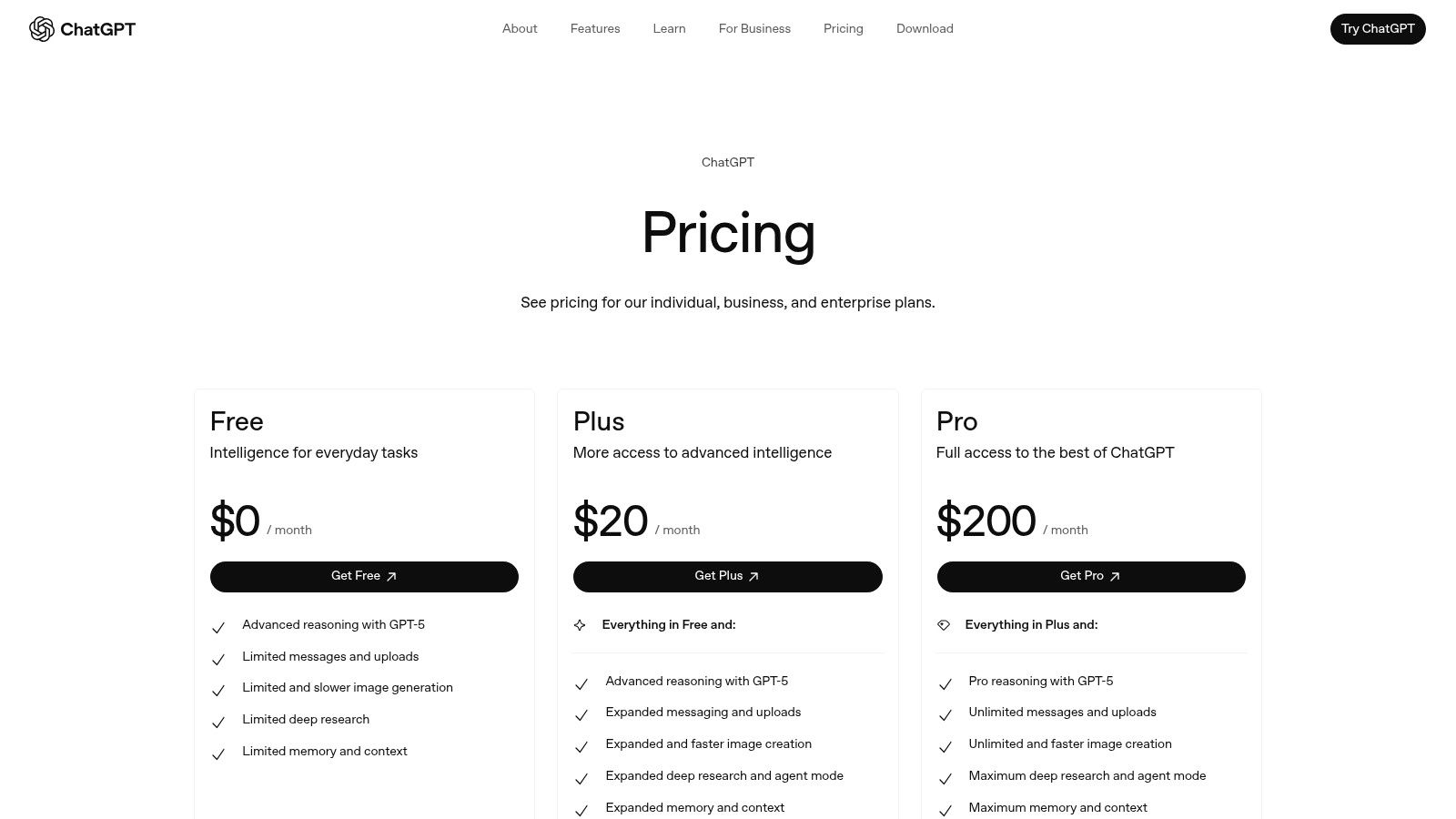
- Pricing: Offers a powerful free tier. Plus ($20/month/user) provides access to the latest models and features like DALL-E 3. Team ($25/month/user) adds a secure workspace and higher limits, while Enterprise offers full compliance and customization.
- Brand Consistency Tip: To ensure on-brand outputs, provide ChatGPT with a detailed brand style guide or create a custom GPT trained on your marketing materials. For deeper integration, developers can power generative AI with brand assets by using the OpenAI API alongside a service like Brand.dev to programmatically feed brand data into prompts.
3. Jasper
While many tools are general-purpose, Jasper is a generative AI platform built from the ground up specifically for marketing teams. Its core focus is enabling brands to create high-quality, on-brand content at scale. It moves beyond simple text generation by incorporating sophisticated features for brand voice, audience personas, and a centralized knowledge base, ensuring all outputs align with established marketing strategies. This makes it an ideal choice for teams needing to maintain strict consistency across numerous campaigns and channels.

What sets Jasper apart is its robust framework for team collaboration and content governance. Marketers can use its Canvas feature to ideate and execute entire multi-asset campaigns in one place, from blog posts and ad variants to social media updates. This workflow-centric approach, combined with its powerful brand-alignment tools, solidifies its position as one of the most comprehensive generative AI tools for marketing departments focused on both speed and consistency.
Use Cases, Pros, and Cons
| Category | Details |
|---|---|
| Primary Use Cases | Creating brand-aligned marketing copy for ads, emails, and social media. Drafting long-form content like blog posts and reports using a brand's knowledge base. Generating campaign assets in a collaborative environment. Repurposing existing content for different channels. |
| Pros | Marketing-Focused: Features are tailored for marketing workflows, not general use. Strong Brand Consistency: Brand Voice, Knowledge, and Audience features ensure outputs are consistently on-brand. Team Collaboration: Built for teams with governance, roles, and shared campaign spaces. |
| Cons | Higher Cost: Advanced features like marketing agents and app builders are locked behind custom-priced Business plans. Learning Curve: Properly setting up the brand voice and knowledge assets requires an initial time investment. |
Pricing and Integration
- Pricing: Starts with Creator ($39/month billed annually) for individuals. Pro and Business tiers add more seats, advanced features like Brand Voices, and collaboration tools, with Business plans offering custom pricing.
- Brand Consistency Tip: The platform's native features are excellent for maintaining brand voice. To extend this, developers can use an external service like the Brand.dev API to programmatically fetch brand assets (like logos or color palettes) and feed them into Jasper's API calls, ensuring even dynamically generated campaign materials remain visually and tonally consistent.
4. Copy.ai
Copy.ai positions itself as more than just a content generator; it’s an AI-powered workflow platform designed for growth and marketing teams. It combines a versatile chat interface with powerful workflow automations and a unique 'Content Agent' capability. This allows teams to move beyond one-off content requests and start automating entire content operations, from research and drafting to final output.
What makes Copy.ai a standout among generative AI tools for marketing is its focus on operational efficiency. The platform grants access to multiple leading models (from OpenAI, Anthropic, and Google), allowing users to select the best engine for a given task. Its core strength lies in its Workflow and Agent Studio, which enables marketers to build reusable, automated processes for tasks like generating personalized outreach sequences or repurposing a webinar into multiple social media posts, significantly reducing manual effort.
Use Cases, Pros, and Cons
| Category | Details |
|---|---|
| Primary Use Cases | Automating content creation workflows, building content 'Agents' for recurring tasks, drafting marketing copy at scale, creating sales email sequences, and leveraging multiple AI models for diverse content needs. |
| Pros | Workflow Automation: Powerful features to automate repetitive content tasks and operations. Multi-Model Access: Flexibility to use models from OpenAI, Anthropic, and Google within one platform. Value for Teams: The entry-level Pro plan offers a generous feature set for small teams. |
| Cons | Credit-Based Automations: Advanced workflow and agent usage is tied to credits, which may require monitoring. Significant Price Jump: The leap from the Pro plan to the more advanced Agents plan can be substantial for smaller businesses. |
Pricing and Integration
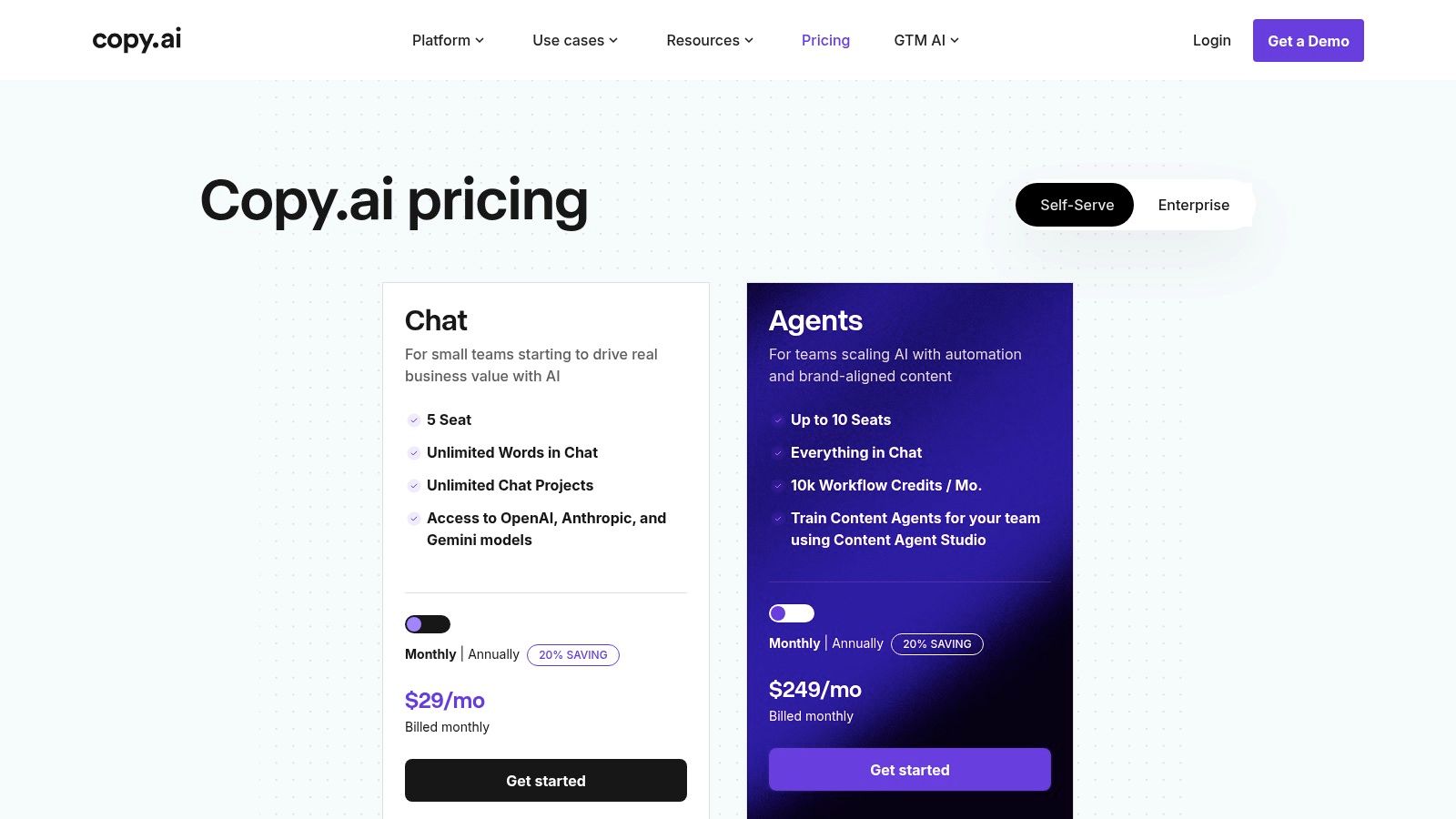
- Pricing: A free plan is available with a 2,000-word limit. The Pro plan (starting at $36/month, billed annually) offers unlimited words and projects for up to 5 users. The Team, Growth, and Scale plans add more advanced features like the Agent Studio, API access, and increased usage limits.
- Brand Consistency Tip: When setting up workflows in Copy.ai, create a dedicated step to define brand voice, tone, and key terminology. For API-driven automation, developers can integrate a service like Brand.dev to programmatically fetch and inject brand guidelines (colors, fonts, messaging pillars) into prompts, ensuring all automatically generated content remains perfectly on-brand.
5. Writesonic
Writesonic positions itself as more than just an AI writer; it's a comprehensive content marketing suite designed for SEO performance. It merges content creation with crucial analytics, helping marketers not only produce articles and copy but also track and optimize their visibility in an AI-driven search landscape. Its standout feature is its focus on Generative Engine Optimization (GEO), providing tools to see how a brand appears in AI-generated search answers.
This platform is built for marketers who need to connect content output directly to organic search results. By integrating with Google Analytics and Search Console, it offers a more holistic view than many standalone writers. For teams focused on SERP dominance, Writesonic is one of the essential generative AI tools for marketing that bridges the gap between creation and performance analysis.
Use Cases, Pros, and Cons
| Category | Details |
|---|---|
| Primary Use Cases | Writing SEO-optimized long-form content, conducting SEO site audits, tracking brand presence in AI search results (GEO), creating landing pages and ad copy, and drafting social media updates with its Chatsonic assistant. |
| Pros | SEO-Centric: Combines powerful AI writing with integrated SEO and AI search monitoring tools. All-in-One Platform: Reduces the need for multiple separate tools for content creation and optimization. Scalable Plans: Offers tiers suitable for freelancers, small businesses, and large enterprises. |
| Cons | Complex Tiers: The feature set and credit system can vary significantly between plans, requiring careful evaluation. Learning Curve: The credit and word quality system (Premium vs. Superior) can be confusing for new users. Interface Clutter: The extensive range of tools can make the user interface feel less streamlined than simpler alternatives. |
Pricing and Integration
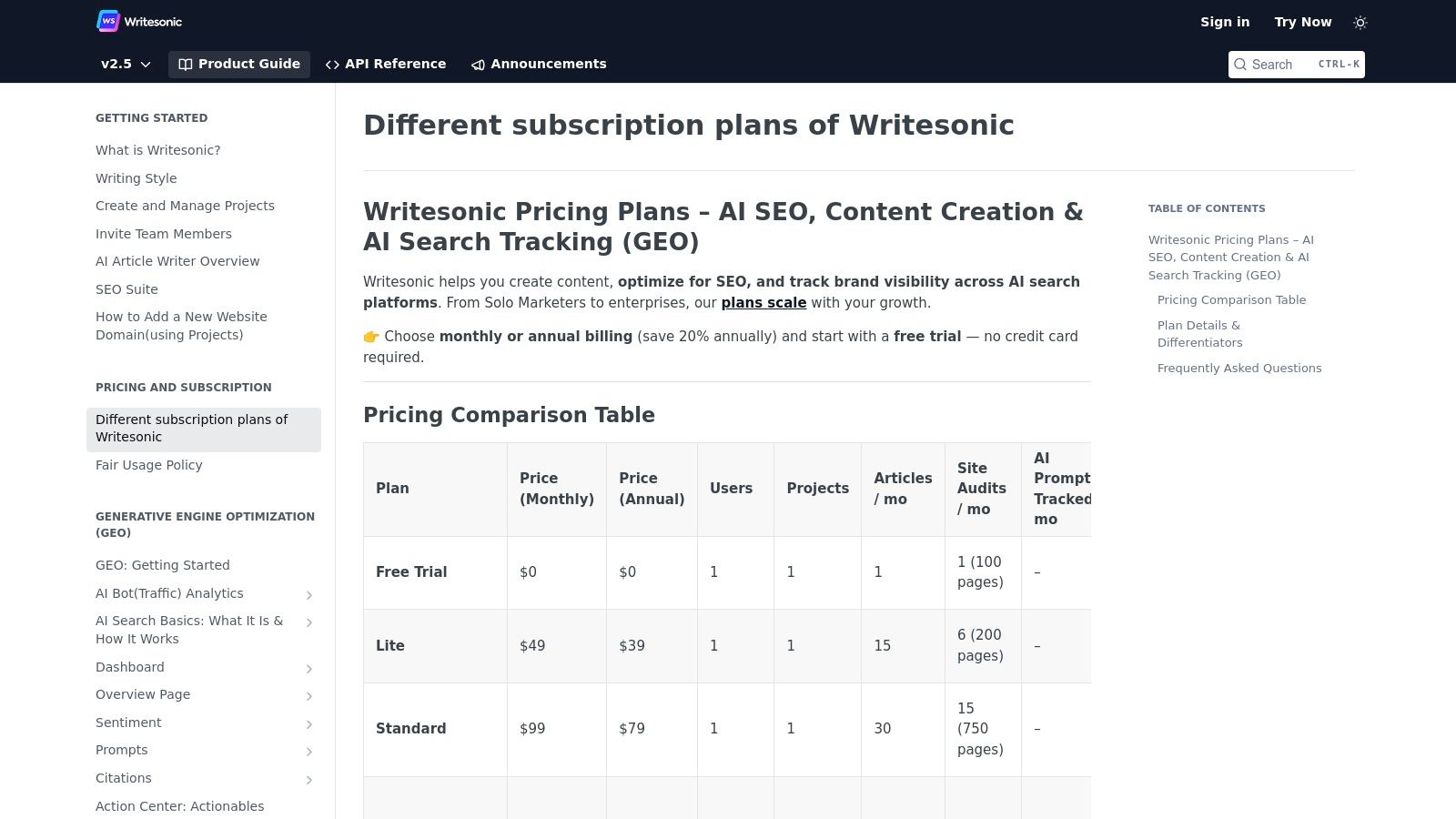
- Pricing: Provides a free trial with limited credits. Paid plans include Freelancer ($20/month), Small Team ($19/month), and Enterprise (custom pricing), with varying word credits and feature access.
- Brand Consistency Tip: After generating initial drafts in Writesonic, use its built-in editor to refine the tone. For systematic brand alignment across all generated assets, integrate the output with a service like Brand.dev. This allows developers to use an API to fetch approved brand elements (logos, color palettes, fonts) and programmatically apply them, ensuring every piece of content meets brand guidelines.
6. Canva, Magic Studio
Canva has evolved from a simple design tool into a comprehensive creative suite, and its Magic Studio places generative AI at the core of the user experience. For marketing teams, especially those without dedicated designers, it's an indispensable platform for producing a high volume of on-brand visual assets, from social media graphics and presentations to short-form videos. The integrated AI features simplify and accelerate the entire creative workflow.
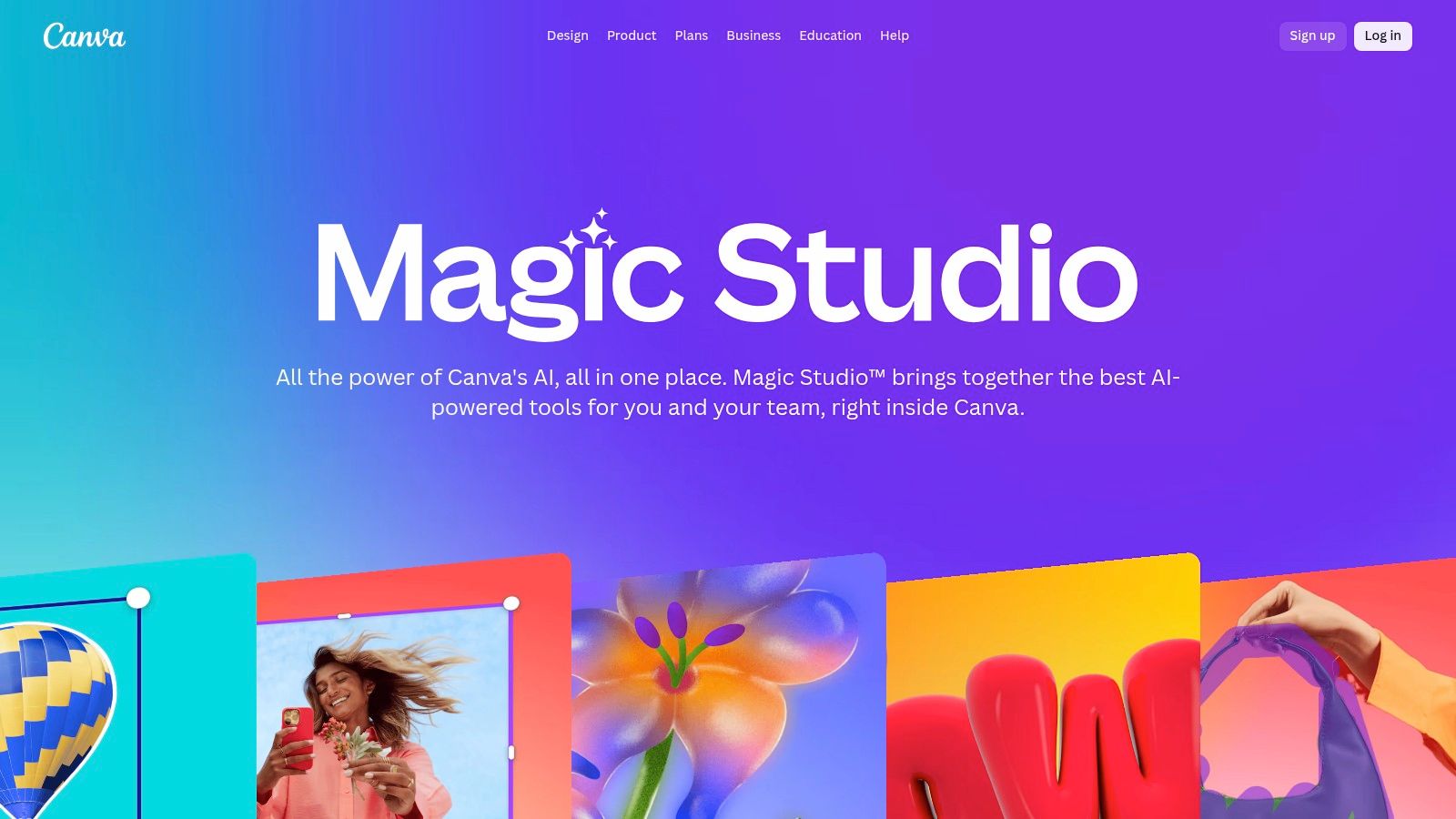
What makes Magic Studio one of the best generative AI tools for marketing is its seamless combination of AI-powered content generation and robust brand management features. Tools like Magic Write for copy and Magic Design for visuals allow marketers to generate entire campaign assets from a single prompt. This integration within a familiar design interface lowers the barrier to entry, empowering anyone on the team to create professional, consistent marketing materials quickly.
Use Cases, Pros, and Cons
| Category | Details |
|---|---|
| Primary Use Cases | Creating social media campaign assets at scale, designing presentations with AI-generated layouts, producing short-form video ads with AI voiceovers, generating on-brand visuals from text prompts, and drafting marketing copy directly within designs. |
| Pros | Accessibility: Extremely user-friendly interface makes design accessible to non-designers. Brand Consistency: Strong Brand Kit features ensure all AI-generated content adheres to company guidelines. All-in-One Platform: Combines text, image, and video generation within a single design environment. |
| Cons | Usage Limits: Many AI features are gated behind paid plans and come with credit-based usage limits. Generic Outputs: Over-reliance on popular templates can lead to "Canva-style" designs that lack uniqueness. Less Granular Control: Pro-level designers may find the AI controls less sophisticated than specialized tools. |
Pricing and Integration
- Pricing: A generous free plan is available. Canva Pro ($119.99/year for one person) and Canva for Teams ($300/year for the first 5 people) unlock premium content, more powerful AI features, and Brand Kits. Enterprise plans offer advanced controls and security.
- Brand Consistency Tip: Use Canva's Brand Kit to its full potential by uploading logos, color palettes, and fonts. For developers building tools that generate branded content like presentations, an API-first service like Brand.dev can programmatically fetch brand assets to ensure AI-generated slides are automatically on-brand. You can learn more about turning AI slides into on-brand decks with this approach.
7. Adobe Express (with Firefly)
https://www.adobe.com/express/
For marketing teams already embedded in the Adobe ecosystem, Adobe Express with its integrated Firefly generative AI is a game-changer for asset creation. It streamlines the production of on-brand social media posts, ads, and flyers by combining an intuitive design interface with powerful AI features. This makes it one of the most practical generative AI tools for marketing departments that need to create high-velocity, commercially safe visual content without extensive design expertise.

What makes Adobe Express powerful is the direct integration of Firefly, which is trained on Adobe Stock's licensed library, offering a layer of commercial safety and brand assurance. Users can generate images from text, create unique text effects, and leverage AI-powered templates to maintain brand consistency effortlessly. The platform acts as a bridge between professional-grade Adobe Creative Cloud apps and the need for quick, day-to-day marketing collateral.
Use Cases, Pros, and Cons
| Category | Details |
|---|---|
| Primary Use Cases | Generating on-brand social media graphics, creating ad variations with generative fill, designing promotional flyers and posters with AI-generated images, applying unique AI text effects to headlines, and quickly resizing assets for different platforms. |
| Pros | Ecosystem Integration: Seamlessly works with Photoshop, Illustrator, and Adobe Stock. Commercially Safe: Firefly is designed to be commercially safe, with indemnification available on select plans. Brand Kits: Centralizes logos, colors, and fonts for easy application across all designs. |
| Cons | Generative Credits: The credit-based system for AI features can be limiting for heavy users. Limited Advanced Control: Lacks the deep creative control found in full Creative Cloud applications like Photoshop. Interface can be slow: The web-based application can sometimes lag with complex projects. |
Pricing and Integration
- Pricing: A free plan is available with limited Firefly credits. The Premium plan ($9.99/month) includes more monthly generative credits, premium templates, and brand kit functionality. Teams plans offer features for multi-user collaboration and administration.
- Brand Consistency Tip: Set up your Brand Kit within Express to ensure all team members use approved assets. For developers building custom marketing automation tools, the Adobe API can be paired with a service like Brand.dev to programmatically pull brand information and feed it into Firefly prompts, ensuring every generated asset adheres strictly to brand guidelines.
8. HubSpot, Content Hub
https://www.hubspot.com/products/content-hub
For marketers seeking a unified platform, HubSpot’s Content Hub integrates generative AI capabilities directly into a full-funnel marketing and CRM system. This tool is designed not just for content creation but for its entire lifecycle, from ideation and SEO optimization to distribution and performance analysis. Its AI features, like the blog writer and content remix tool, are built to work seamlessly within the HubSpot ecosystem, leveraging customer data to inform content strategy.
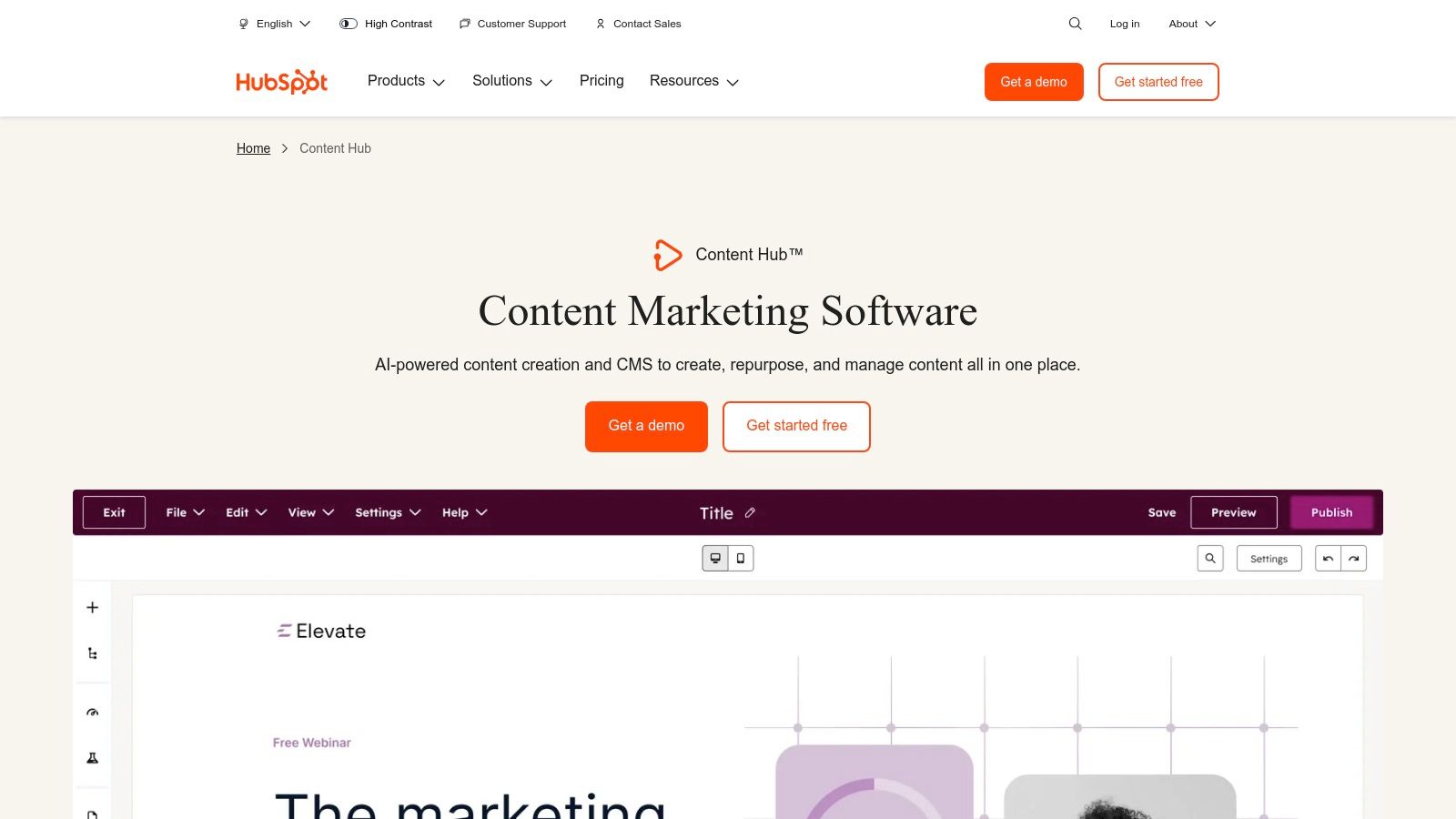
What makes Content Hub a standout among generative AI tools for marketing is its native connection to the HubSpot CRM. This allows marketers to create AI-generated content that is instantly personalizable using contact properties, a feature known as "Smart Content." By combining AI writing with robust analytics and automation workflows, it bridges the gap between content production and business impact, making it a powerful system of record for content-driven growth.
Use Cases, Pros, and Cons
| Category | Details |
|---|---|
| Primary Use Cases | Generating and remixing blog posts, creating SEO-optimized content outlines, drafting marketing emails, building landing pages, and using smart rules to dynamically personalize website content based on CRM data. |
| Pros | Single System of Record: Connects content creation, distribution, analytics, and customer data in one place. Built-in Personalization: Leverages CRM data for AI-driven "Smart Content" and targeted campaigns. Scalability: Offers features and governance that grow with your team, from starter to enterprise levels. |
| Cons | Cost Barrier: The most powerful AI and personalization features are in higher-priced Professional and Enterprise tiers. Billing Structure: Higher tiers often require an annual commitment, reducing flexibility. Less Specialized: The AI writing tools may be less advanced than dedicated, standalone content generators. |
Pricing and Integration
- Pricing: Starts with a limited Free tier. Paid plans begin with Starter ($15/month), Professional ($450/month), and Enterprise ($1,500/month), with costs scaling based on features and marketing contacts.
- Brand Consistency Tip: Maintain a unified brand voice by creating a prompt library within your HubSpot portal. For advanced personalization, developers can leverage the HubSpot API alongside Brand.dev to pull in brand assets for dynamic content. This is especially effective for personalized email marketing campaigns where consistent branding is key.
9. Synthesia
Synthesia is a leading AI video generation platform that enables marketing teams to create professional, studio-quality videos with AI avatars and voices, eliminating the need for cameras, microphones, or film crews. It is exceptionally well-suited for producing training videos, product explainers, and corporate communications at a fraction of the traditional time and cost. The platform allows users to simply type a script, choose an avatar, and generate a video in minutes.
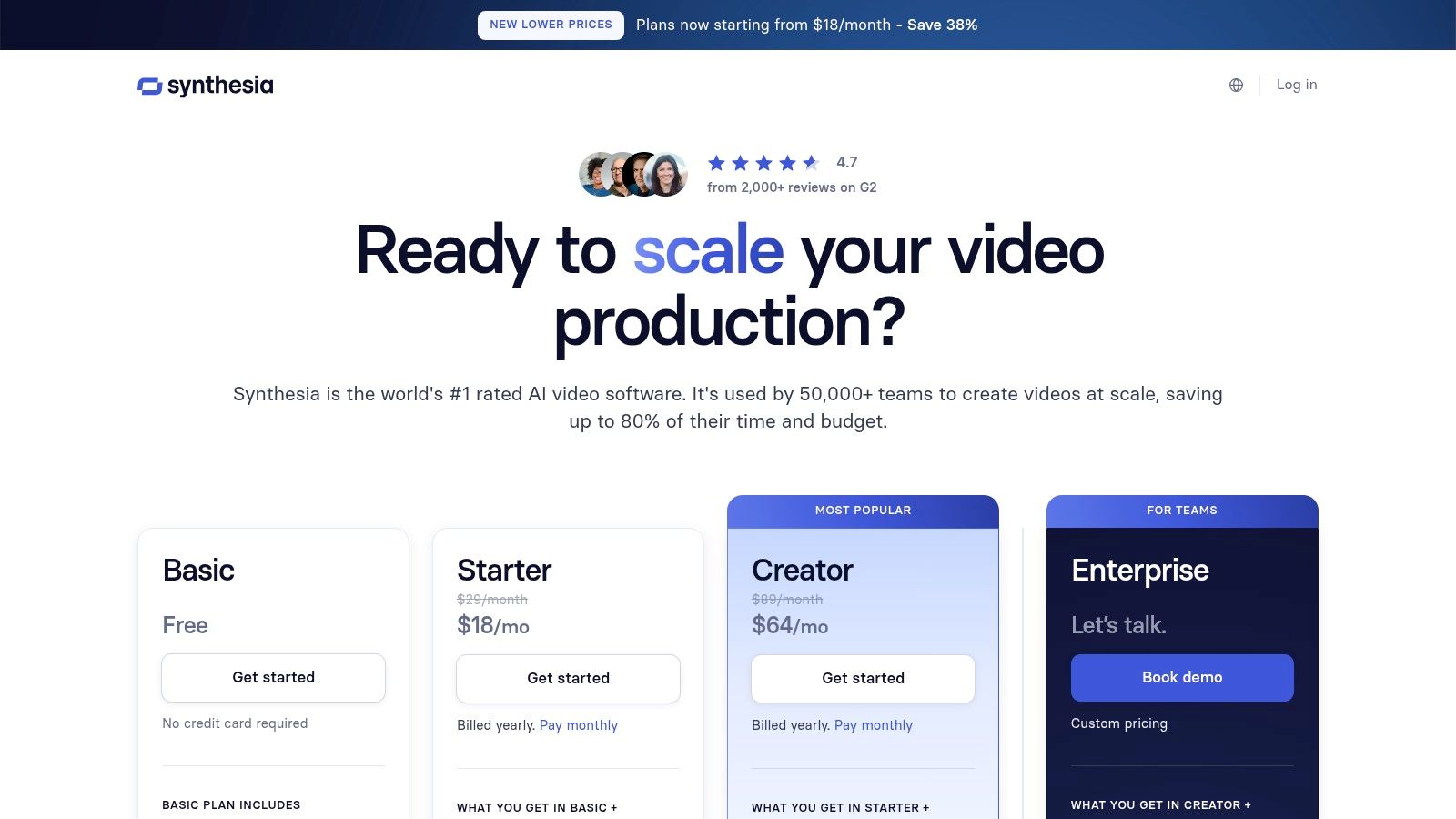
What makes Synthesia a standout generative AI tool for marketing is its powerful localization and personalization engine. With support for over 140 languages and a diverse library of stock avatars, a single video can be translated and adapted for global audiences with a few clicks. For high-touch marketing, this means creating personalized sales videos or onboarding materials at scale, a task that was previously resource-prohibitive.
Use Cases, Pros, and Cons
| Category | Details |
|---|---|
| Primary Use Cases | Creating corporate training and onboarding videos, producing product marketing explainers, localizing ad creatives for international markets, generating personalized sales outreach videos, and developing internal communications from leadership. |
| Pros | Scalable Production: Dramatically reduces video creation time and cost. Powerful Localization: Effortlessly translate and dub videos into 140+ languages. Enterprise-Ready: Offers robust features like custom avatars, SCORM export, and team collaboration tools. |
| Cons | Synthetic Feel: Avatars, while advanced, can sometimes lack human emotion and may not fit every brand's style. Credit Limitations: Lower-tier plans have video minute caps that can be restrictive for high-volume production. No Live Action: Cannot replace content requiring real people or on-location shots. |
Pricing and Integration
- Pricing: Starts with a Creator plan at $22/month (billed annually) for 10 minutes of video per month. The Pro plan ($67/month) includes more video minutes and features. A custom Enterprise plan offers unlimited video, custom avatars, and enhanced security.
- Brand Consistency Tip: Synthesia's Enterprise plan includes a Brand Kit where you can upload logos, fonts, and color palettes. To further ensure brand alignment, especially when scripts are generated by other AI tools, use a service like Brand.dev to programmatically access brand guidelines via API, ensuring that all text inputs for video scripts match the approved company tone and messaging.
10. Descript
Descript transforms audio and video editing from a complex, timeline-based task into a simple, text-based workflow. It transcribes your media, allowing you to edit videos and podcasts simply by editing the text transcript, much like a word document. This approach dramatically lowers the barrier to entry for creating professional-quality media assets, making it an indispensable tool for marketing teams.
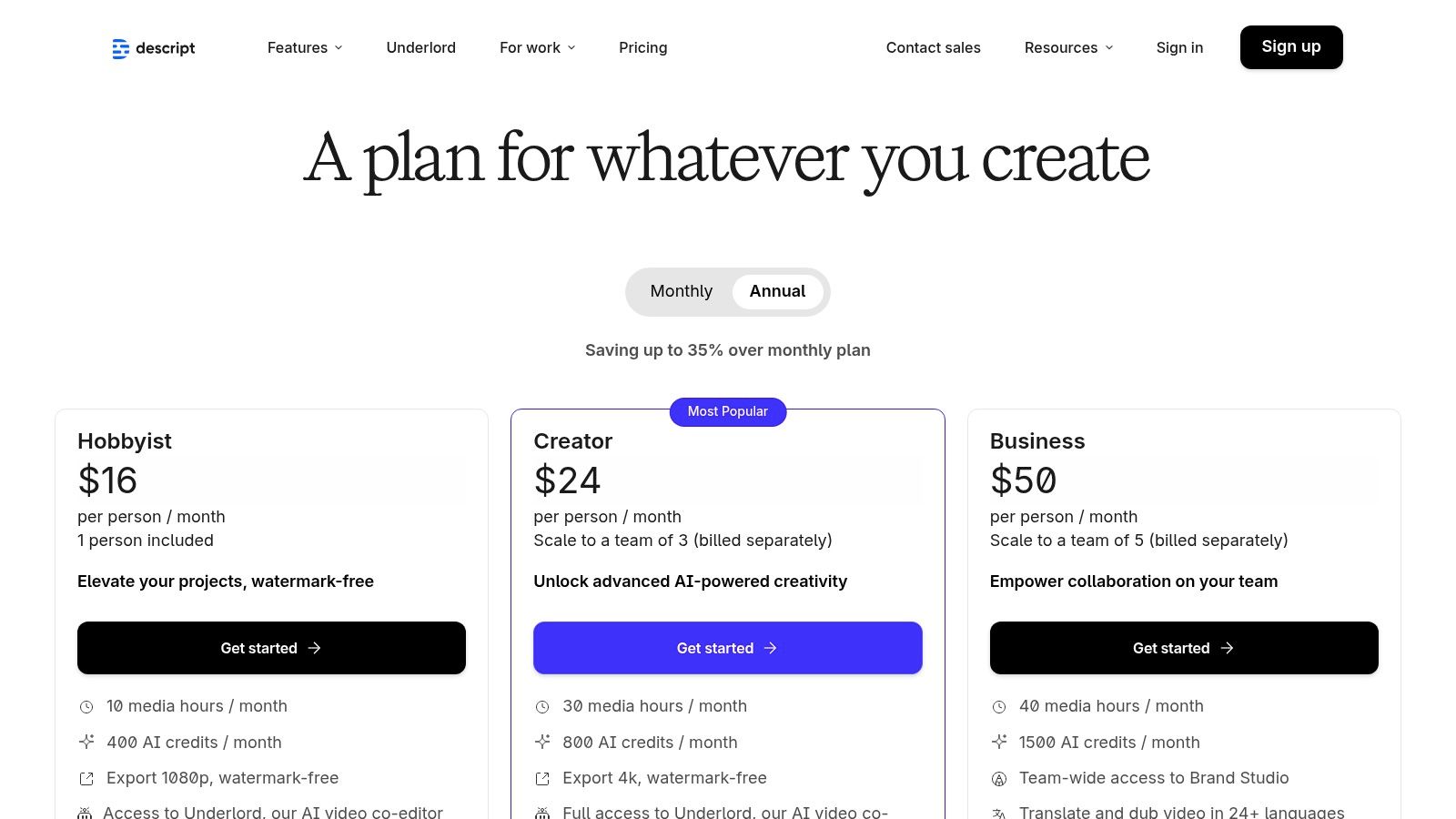
What makes Descript a standout generative AI tool for marketing is its suite of AI-powered features. "Studio Sound" enhances audio quality with a single click, removing background noise and echo. The "Overdub" feature allows you to create an AI clone of your voice to correct audio mistakes or add new narration without re-recording. For content repurposing, its AI can quickly find the best clips from long-form content and reformat them into engaging social media videos with dynamic captions.
Use Cases, Pros, and Cons
| Category | Details |
|---|---|
| Primary Use Cases | Editing podcasts and video interviews, repurposing webinars into short social media clips, creating product demos and tutorials, cleaning up audio for marketing videos, and generating dynamic, animated captions. |
| Pros | Intuitive Workflow: Editing media by editing text is incredibly fast and easy to learn. Powerful AI Features: Studio Sound and Overdub are game-changers for production quality and efficiency. Excellent for Repurposing: Makes it simple to extract and format clips from long-form content. |
| Cons | Cloud-Dependent: Performance relies heavily on a stable and fast internet connection. Transcription Limits: Plans have caps on transcription hours, which can be a constraint for high-volume creators. Learning Curve for Advanced Features: While the basics are simple, mastering the multi-track editor takes time. |
Pricing and Integration
- Pricing: Offers a free plan with basic features. Paid plans include Creator ($12/user/month) and Pro ($24/user/month), which increase transcription hours and unlock advanced AI features like Overdub. Enterprise plans are available for larger teams needing advanced security and support.
- Brand Consistency Tip: Use Descript’s templates to pre-set your brand's fonts, colors, and logo placement for captions and video assets. For deeper API-driven branding, a service like Brand.dev could be used to fetch brand assets programmatically and apply them in a post-production workflow, ensuring all video outputs are consistently branded.
11. Shopify App Store, AI Marketing tools
For direct-to-consumer marketers, the best AI tools are often those that live directly inside their commerce stack. The Shopify App Store has become a bustling marketplace for generative AI tools for marketing designed to integrate natively within the Shopify admin. This allows for store-aware execution, meaning the apps can pull product data, customer segments, and order history to generate highly relevant content without constant data exporting and importing.
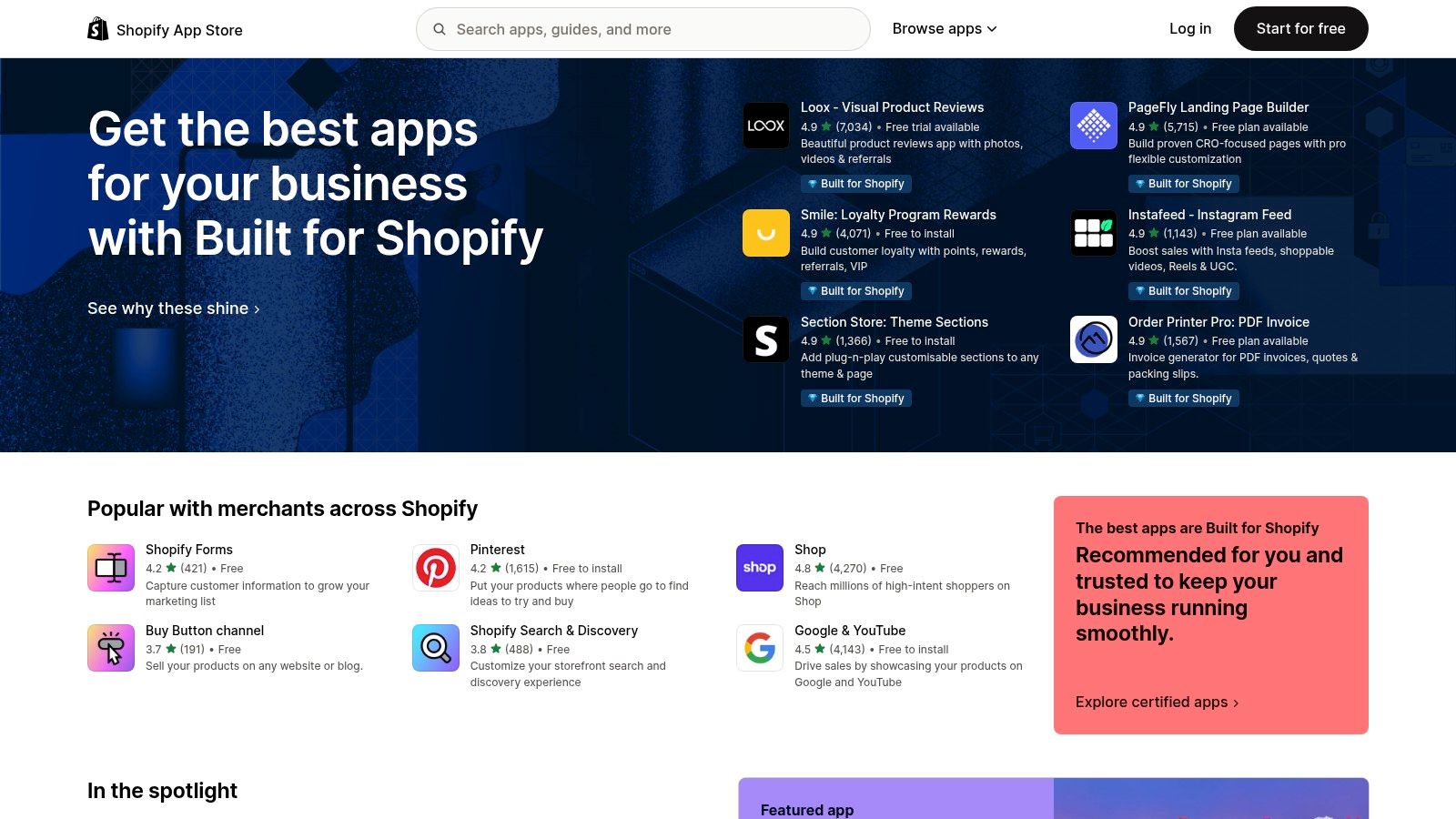
Unlike standalone platforms, this ecosystem offers specialized apps for specific tasks like writing SEO-optimized product descriptions, generating ad creative for social campaigns, or automating personalized email flows. The key advantage is immediacy and context. You can generate and deploy marketing assets in just a few clicks, right where you manage your products and customers. The easy install/uninstall process and app-level trials make it a low-risk environment for experimenting with different AI solutions to find what drives the most impact for your store.
Use Cases, Pros, and Cons
| Category | Details |
|---|---|
| Primary Use Cases | Automating product description writing, generating AI-powered ad creatives and copy, creating email marketing campaigns and flows, optimizing blog content for SEO, and personalizing customer communication. |
| Pros | Native Integration: Apps work directly with your store's data for seamless, context-aware execution. Specialized Tools: A wide marketplace of apps focused on specific e-commerce marketing needs. Low-Risk Trials: Easy to install, test, and remove apps to find the best fit. |
| Cons | Variable Quality: The effectiveness and quality can differ greatly between apps, requiring careful vetting. Hidden Costs: Many apps use credit or usage-based pricing, which can add up to unpredictable monthly expenses. Potential for Bloat: Installing too many apps can slow down your site or create conflicting scripts. |
Pricing and Integration
- Pricing: Varies widely by app. Many offer a free tier, a free trial, or a usage-based model (e.g., pay-per-word or per-image). Paid plans can range from a few dollars to hundreds per month.
- Brand Consistency Tip: Since you're managing multiple apps, brand voice can fragment. Use an API service like Brand.dev as a central source of truth. By feeding your brand guidelines (logos, colors, fonts, tone) from Brand.dev into the custom instructions or API calls of compatible Shopify apps, you can ensure that the AI-generated product descriptions, emails, and ads all maintain a consistent brand identity.
12. G2, AI Writing Assistants (category)
https://www.g2.com/categories/ai-writing-assistant/enterprise
While not a generative AI tool itself, G2's category for AI Writing Assistants is an indispensable research hub for marketing leaders. Instead of providing a single solution, it offers a comprehensive marketplace to compare, review, and shortlist the best-fit generative AI tools for marketing. This platform empowers teams to make informed purchasing decisions by leveraging verified user reviews, detailed feature comparisons, and satisfaction scores.
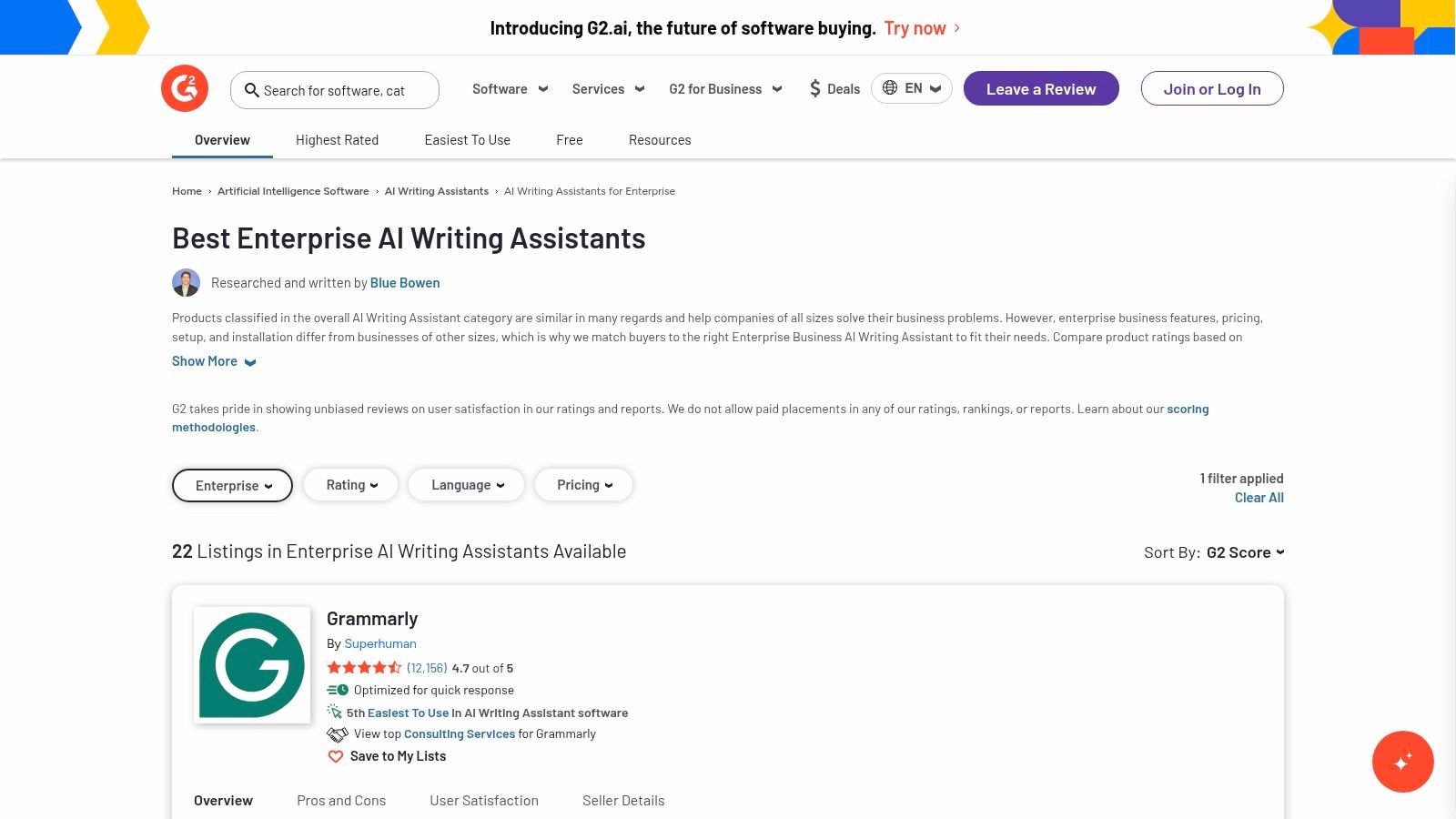
What makes G2 essential is its grid-based comparison functionality and enterprise-specific filters. Marketers can quickly see how different tools stack up on key features like content optimization, plagiarism checking, and team collaboration. This side-by-side view cuts through marketing jargon, providing a data-driven foundation for vendor evaluation. For any team serious about investing in generative AI, G2 is the starting point for building a shortlist and validating vendor claims.
Use Cases, Pros, and Cons
| Category | Details |
|---|---|
| Primary Use Cases | Researching and comparing generative AI vendors, creating a shortlist of tools for demos, validating vendor features with user reviews, and analyzing market trends in AI writing technology. |
| Pros | Side-by-Side Comparisons: The grid format makes it easy to evaluate multiple tools at once. Verified Reviews: Provides authentic user feedback to inform purchasing decisions. Enterprise Filters: Helps larger teams find solutions that meet specific security and scalability needs. |
| Cons | Information Gaps: Some vendor profiles may lack deep feature details, requiring a demo. Review Variability: The volume and recency of reviews can differ significantly between popular and niche tools. Surface-Level Data: Pricing is often not listed directly, requiring contact with sales teams. |
Pricing and Integration
- Pricing: Free to use for research and comparison. Pricing for the listed software varies by vendor, with details available on their respective websites or through sales demos.
- Brand Consistency Tip: When evaluating tools on G2, look for features related to brand voice management and custom templates. After selecting a tool, its API can often be connected to a service like Brand.dev, allowing your system to programmatically supply brand guidelines (logos, colors, fonts, tone) to ensure all generated content remains consistently on-brand.
Top 12 Generative AI Marketing Tools Comparison
| Product | Primary use case | Key features | Target audience | Differentiator & pricing |
|---|---|---|---|---|
| Brand.dev | Instant brand data & automated theming via API | Logos, colors, typography, full styleguides, backdrops, screenshots, NAICS, SDKs (TS/Py/RB), Zapier | Developers, SaaS, fintech, marketing teams needing programmatic branding | Single endpoint for complete brand kits; dev‑first SDKs; self‑serve trial (try without card); pricing on site/contact sales |
| OpenAI, ChatGPT | General-purpose generative AI assistant | Multimodal, custom GPTs, latest models, business workspace & security | Marketers, teams needing versatile AI workflows | Very versatile across tasks; free & paid tiers (Pro/Business/Enterprise) |
| Jasper | Marketing-focused content creation & workflows | Brand Voices, Knowledge, Canvas, collaboration & governance | Marketing teams and agencies | Strong brand-consistency controls; Business plan has custom pricing |
| Copy.ai | AI content generation + workflow automations | Multi-model access, unlimited chat (chat plan), Content Agent Studio, workflows | Small growth teams to larger marketing teams | Good value entry tier; automation/agents may add credit costs |
| Writesonic | SEO-driven content + AI search visibility | AI writer, GEO dashboards, SEO audits, GA/GSC integrations | SEO teams, content marketers, agencies | Combines writing with SEO monitoring; tiered plans and credit limits |
| Canva, Magic Studio | Fast visual & short-form content creation | Magic Write/Design, image/video generation, brand templates, team controls | Non-design marketers and small teams | Rapid multi-format asset creation; free tier + paid Business/Enterprise |
| Adobe Express (Firefly) | Quick branded creatives with Adobe assets | Firefly generative, brand kits, premium templates, Adobe Stock | Teams in Adobe ecosystem needing fast assets | Adobe Stock + Creative Cloud tie-in; uses generative credits |
| HubSpot, Content Hub | Content creation + CRM-connected distribution | AI writing/remix, SEO assistant, personalization, CMS + workflows | Inbound marketers using HubSpot CRM | Single system of record (content + contacts); Professional+ tiers pricier |
| Synthesia | AI spokespersons & localized video at scale | Avatars, 140+ languages/voices, templates, AI dubbing, bulk personalization | L&D, product, marketing teams doing video at scale | Speeds localization and video production; minutes/credits caps apply |
| Descript | Edit audio/video like a document & repurpose assets | Text-based editing, Overdub voice, Studio Sound, captions, templates | Podcasters, video marketers, content teams | Fast repurposing of long-form to short-form; transcription/minute limits by plan |
| Shopify App Store, AI Marketing tools | Add store-aware AI apps for ads, SEO, email, social | App trials, native admin integration, reviews, usage-based pricing | DTC merchants and ecommerce marketers | Native store execution and easy trials; quality and pricing vary by app |
| G2, AI Writing Assistants (category) | Research & shortlist AI writing/marketing vendors | Reviews, comparison grids, satisfaction scores, vendor details | Buyers, procurement, evaluation teams | Independent reviews and filters; free research but vendor demos often required |
How to Choose the Right AI Tools for Your Marketing Stack
Navigating the expansive landscape of generative AI tools for marketing can feel overwhelming. As we've explored, the market is filled with powerful solutions, from content generators like Jasper and Writesonic to creative powerhouses like Canva's Magic Studio and Adobe Firefly. The key takeaway is not to search for a single, all-powerful tool, but to strategically assemble a stack that aligns with your specific marketing goals and operational realities.
The right combination of tools will look different for every organization. A fast-growing SaaS company might prioritize HubSpot's Content Hub for its integrated ecosystem, while a developer-centric team building custom applications will find immense value in APIs from OpenAI and Brand.dev to fuel their unique products. The journey begins not with a demo, but with an internal audit.
A Framework for Selecting Your AI Marketing Stack
Before you commit to a subscription, work through a structured evaluation process. This ensures you're investing in solutions that solve actual problems, not just chasing the latest technology.
1. Identify Your Core Bottlenecks: Start by pinpointing the most significant friction points in your current marketing workflow.
- Content Velocity: Are you struggling to produce blog posts, social media updates, and ad copy at the required scale? Tools like Jasper, Copy.ai, and Writesonic are designed to solve this. For teams focused specifically on SEO-driven content at scale, a platform like Outrank can automate the creation of search-optimized articles.
- Creative Asset Production: Does your design team face constant requests for simple visual assets, ad variations, or video clips? Canva and Adobe Express can democratize creative production.
- Brand Consistency: Is maintaining a consistent brand voice and visual identity across all AI-generated outputs a major concern? An API like Brand.dev is crucial for providing foundational brand data to all your other tools.
- Personalization at Scale: Do you need to tailor user onboarding, enrich transaction data, or generate on-brand UIs for different customer segments? Again, a developer-focused tool is essential here.
2. Evaluate Integration and Workflow Compatibility: A powerful tool is useless if it doesn't fit into how your team works. Consider how a potential new platform integrates with your existing Customer Relationship Management (CRM), Content Management System (CMS), and other marketing automation software. For instance, a tool's ability to connect with your HubSpot portal or Shopify store can be a deciding factor.
3. Start Small and Validate with Pilot Projects: Resist the urge to overhaul your entire marketing operation at once. Select one or two high-impact use cases and run a pilot project with a small, dedicated team. Use free trials to their full extent. This approach allows you to measure tangible ROI, gather real user feedback, and build a strong business case before committing to a larger, department-wide rollout. A successful pilot might involve automating the first draft of your weekly blog posts or generating a batch of social media graphics for an upcoming campaign.
The Human Element in an AI-Powered Future
It's crucial to remember that generative AI is a force multiplier, not a replacement for human creativity and strategic oversight. The most successful marketing teams will be those who learn to collaborate with these tools effectively. Your team's expertise is needed to guide the AI with well-crafted prompts, edit and refine the outputs to ensure they meet quality standards, and inject the nuanced brand voice and strategic insight that machines cannot replicate.
As you build your stack, consider looking at broader analyses to see how different tools are categorized and compared. For a deeper dive into content-specific platforms, a resource like the Top AI Content Creation Tools for Marketers from ShortsNinja can provide additional perspective on platforms dedicated purely to creation.
Ultimately, integrating generative AI tools for marketing is a strategic journey. It's about empowering your team to work smarter, create faster, and connect with your audience on a more personal level. By starting with a clear understanding of your needs and adopting a methodical approach to selection and implementation, you can build an intelligent, efficient marketing engine that drives sustainable growth and keeps your brand ahead of the curve.
Ready to ensure every piece of AI-generated content is perfectly on-brand? Brand.dev provides the foundational brand data via a simple API, allowing you to programmatically fetch logos, colors, fonts, and more to feed your generative AI workflows. Learn how Brand.dev can become the brand consistency layer in your modern marketing stack.